
On this page
Why fascia rots behind gutters
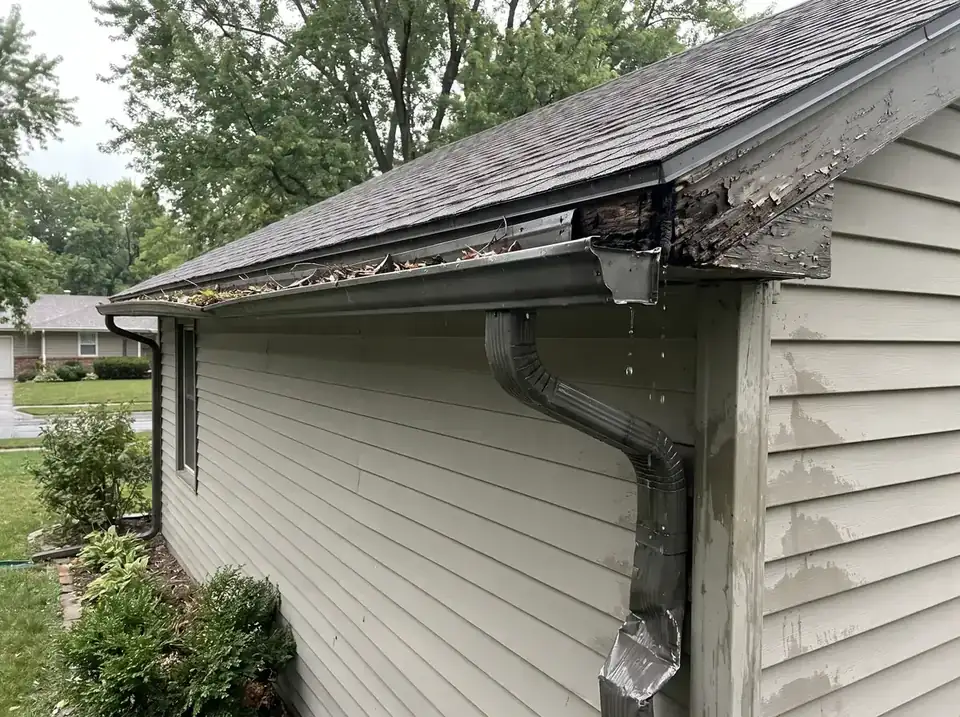
Fascia rots when it stays wet. The usual sources:
| Source | How water reaches the wood |
|---|---|
| Missing or short drip edge | Water runs off the shingles and down behind the gutter |
| Clogged gutter | Water fills the trough and spills over the back |
| Gutter pulled away | A gap opens between gutter and fascia |
| Leaking corner | Steady drip onto the same spot |
| Ice at the eave | Meltwater backs up behind the gutter |
| Peeling paint | Bare wood soaks up water |
Brentwood's climate makes it worse. With about 54 inches of precipitation a year and humid summers, wet wood does not dry quickly, and a board that gets damp in every storm can go soft within a few years.
Signs of fascia damage
- Paint peeling or blistering along the roof edge
- Dark stains or green growth on the board
- Soft wood that gives under a screwdriver
- A gutter tilting forward or pulling away
- Gaps at corners where boards have split or shrunk
- Wasps, carpenter bees or birds getting into the soffit
How fascia is repaired
- Take down the gutter along the damaged run.
- Probe the wood to find where the rot stops.
- Cut out the bad board back to sound wood, checking the rafter tails behind it.
- Replace the board with new primed lumber or a rot-resistant material, sealed at the joints.
- Repair the soffit where it has rotted or sagged.
- Add a drip edge or gutter apron so water goes into the gutter, not behind it.
- Prime and paint, or wrap the new wood.
- Rehang the gutter on hidden hangers screwed into sound wood.
Fascia materials
| Material | Pros | Cons |
|---|---|---|
| Painted wood | Traditional, easy to match | Needs paint; rots if wet |
| Primed finger-jointed pine | Cheaper | Rots fast if paint fails |
| Composite or PVC trim | Does not rot | Costs more; moves with heat |
| Aluminum wrap over wood | Low maintenance | Hides rot if the wood is bad |
Fascia on Brentwood houses
On the brick ranches and traditionals built from the late 1960s through the 1990s, fascia is usually painted wood, often wrapped in aluminum at some point. Rot shows up most at inside corners below valleys, at the ends of runs, and on the shaded north and east sides where wood stays wet longest. On newer homes, composite trim is more common, and the issue is more often gaps and caulk than rot.
Soffit and attic ventilation
Many soffits have vents that feed air to the attic. Replacing soffit is a chance to clear vents that paint or insulation has blocked. Good attic ventilation helps the roof edge stay cold in winter, which reduces ice along the eave.
Fascia and the gutter quote
A good gutter contractor probes the fascia before quoting and says how rotten wood will be priced, usually per foot. If a quote assumes all the wood is sound, ask what happens if it is not.
Why corners rot first
On many Brentwood houses, the worst fascia rot is at inside corners below valleys. A valley sends a heavy stream of water into one spot; if the gutter overflows there, the water hits the fascia and the corner joint of the boards behind. Over years, that joint opens and the end grain soaks up water. When the gutters come off for a repair, those corners are the first thing to check.
Pests in the soffit
Gaps in rotten fascia and soffit invite carpenter bees, wasps, birds and squirrels. Replacing the wood closes the gaps. If animals are already inside, a wildlife professional should deal with them before the soffit is closed.